Why Vehicle Access Control Is Entering a New Era
Vehicle access control has traditionally focused on a simple objective: determining whether a vehicle should be allowed to enter or exit a facility.
For many years, this process relied on manual verification, fixed access rules, and isolated security systems.
While these methods worked in relatively predictable environments, modern facilities face a different reality.
Commercial campuses, industrial facilities, logistics hubs, mixed-use developments, and large residential communities now manage increasing vehicle volumes, multiple user groups, and more complex operational requirements than ever before.
In many growing facilities, access control challenges no longer stem from a lack of barriers or validation tools. The real challenge is managing increasing traffic complexity without creating delays, administrative burdens, or security inconsistencies.
Vehicle access control is therefore shifting from rule-based gate management toward systems capable of making context-aware operational decisions with minimal human intervention.
What Is Intelligent Automation in Vehicle Access Control?
Intelligent automation combines automated access technologies, operational data, and integrated decision-making processes to improve how vehicle access is managed.
Rather than simply opening or closing gates based on predefined rules, modern systems can process real-time information and support more adaptive authorization workflows.
Intelligent automation improves vehicle access control by automating authorization, enhancing monitoring, reducing administrative workload, and helping organizations manage growing traffic complexity more efficiently.
Common technologies include:
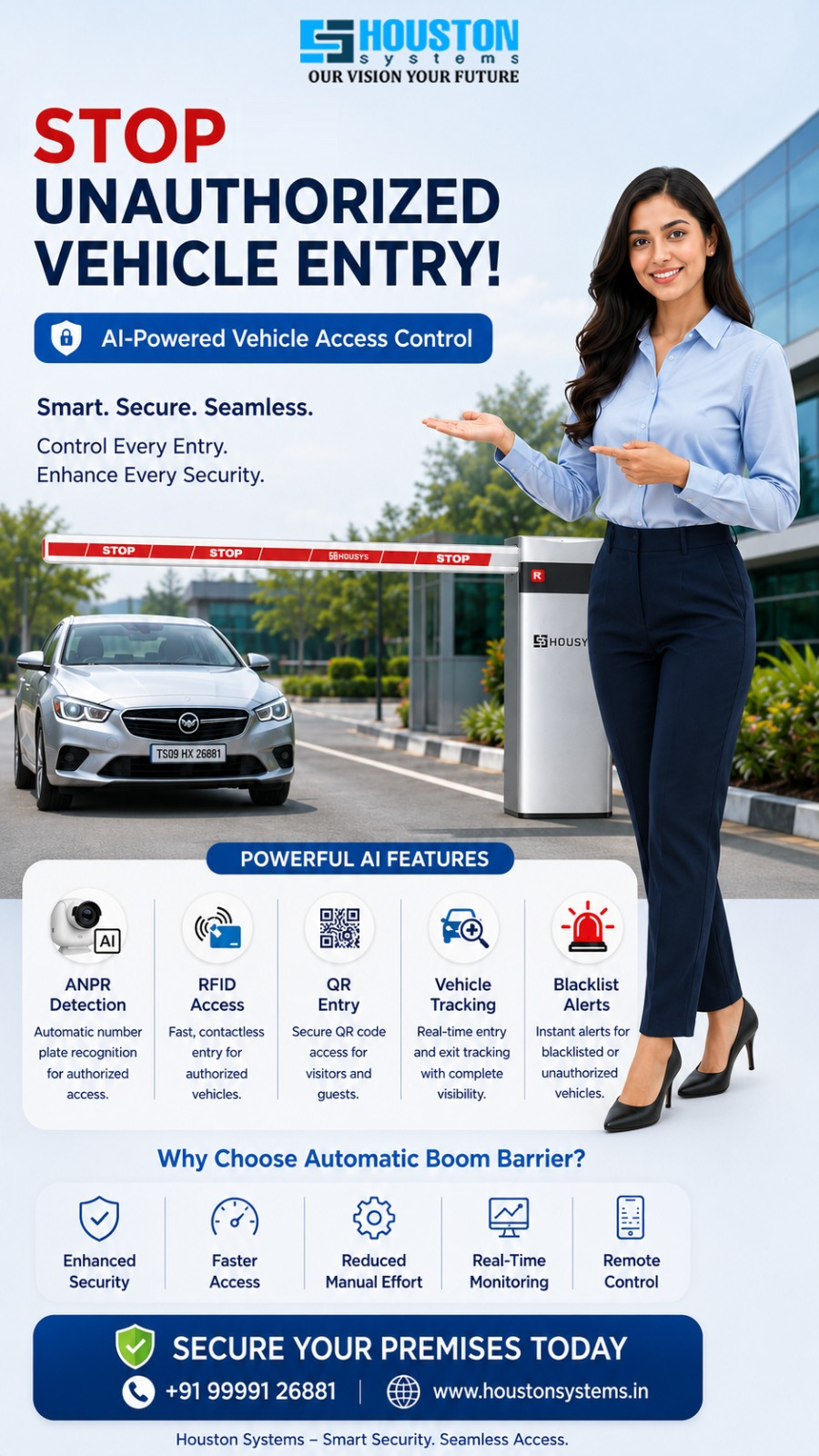
- ANPR (Automatic Number Plate Recognition)
- RFID authentication
- Vehicle detection sensors
- Automated authorization workflows
- Centralized monitoring platforms
- Connected security infrastructure
The objective is not simply automation—it is operational intelligence.
Why Traditional Access Control Models Are Under Pressure
Many organizations originally designed access systems around fixed traffic patterns and predictable user behavior.
Today, facilities often manage:
- Employees
- Visitors
- Contractors
- Delivery vehicles
- Service providers
- Temporary access requests
Applying the same authorization process to every vehicle can create unnecessary delays and increase administrative complexity.
As facilities expand, traditional access models often struggle to keep pace with operational growth.
This has accelerated demand for systems capable of supporting predictive access management and automated decision-making.
How Intelligent Automation Is Reshaping Vehicle Access Control
1. Faster and More Consistent Vehicle Authorization
One of the most immediate benefits of intelligent automation is the ability to reduce manual processing.
Automated systems can verify credentials, identify registered vehicles, and process authorization requests within seconds.
This improves:
- Vehicle throughput
- Entry efficiency
- User experience
- Traffic consistency
In high-volume environments, even small reductions in authorization time can significantly improve overall operational performance.
2. Smarter Access Decisions
Traditional access systems typically operate using fixed validation rules.
Modern automated systems can evaluate multiple variables simultaneously, including:
- Vehicle identity
- Access schedules
- User permissions
- Location-specific policies
- Operational requirements
This allows organizations to apply more precise controls without increasing operational complexity.
3. Improved Security Visibility and Monitoring
Intelligent automation is also transforming how organizations monitor vehicle activity.
Modern systems provide:
- Real-time event tracking
- Automated alerts
- Access history records
- Continuous monitoring
Rather than reviewing information after an incident occurs, security teams can maintain greater situational awareness and respond more proactively.
Intelligent automation helps shift vehicle access management from reactive monitoring to continuous operational awareness.
4. Better Management of High-Traffic Environments
As vehicle movement increases, maintaining efficient access control becomes significantly more challenging.
Automated systems help manage:
- Peak-hour traffic
- Visitor processing
- Delivery scheduling
- Multi-entry operations
Many organizations implement an automated vehicle access management solution to streamline authorization workflows, improve monitoring visibility, and manage growing traffic volumes more efficiently.
In many facilities, vehicle access delays are caused less by physical infrastructure limitations and more by inefficient authorization workflows that fail to scale with operational growth.
This operational challenge is one of the key drivers behind intelligent automation adoption.
5. From Data Collection to Operational Intelligence
Traditional access systems often collect information without fully utilizing it.
Intelligent automation transforms access data into actionable operational insight.
Organizations can analyze:
- Traffic patterns
- Vehicle frequency
- Authorization trends
- Entry bottlenecks
- Resource utilization
These insights support operational intelligence by helping decision-makers identify inefficiencies, improve planning, and anticipate future requirements.
The shift from data collection to operational intelligence is one of the most significant changes occurring in modern access management.
6. Reduced Administrative Complexity
Managing access permissions manually often requires substantial administrative effort.
Common tasks include:
- Visitor approvals
- Credential updates
- Access scheduling
- Reporting and audits
Automation reduces repetitive processes and improves consistency across access operations.
This allows teams to focus on higher-value operational and security activities.
7. Greater Scalability for Future Growth
One of the strongest advantages of intelligent automation is adaptability.
As facilities expand and access requirements evolve, automated systems can scale more efficiently than manual processes.
This is particularly important for:
- Commercial campuses
- Industrial facilities
- Logistics operations
- Multi-site enterprises
Organizations that invest in scalable infrastructure today are generally better prepared for future growth and changing operational demands.
Real-World Operational Scenario
A growing business park originally relied on manual validation processes for visitors, contractors, service vehicles, and delivery traffic.
As occupancy increased, access management became increasingly difficult.
Vehicle queues grew longer during peak periods, contractor verification required additional administrative effort, and delivery scheduling became harder to coordinate.
After implementing automated authorization workflows and centralized monitoring:
- Visitor processing became faster
- Contractor access became easier to manage
- Delivery coordination improved
- Security visibility increased
- Administrative workload decreased
The most valuable outcome was not simply faster access—it was the ability to manage growing operational complexity without continuously increasing staffing requirements.
Beyond Automation: The Rise of Intelligent Infrastructure
Vehicle access control is evolving beyond traditional gate management.
Organizations increasingly view access systems as part of a larger connected infrastructure strategy.
This shift includes:
- Connected security ecosystems
- Automated authorization processes
- Predictive access management
- Data-driven operational planning
- Integrated facility management platforms
As systems become more intelligent, vehicle access control is playing a larger role in overall operational performance, business continuity, and infrastructure planning.
Frequently Asked Questions
1. What is intelligent automation in vehicle access control?
Intelligent automation combines automated access technologies, operational data, and integrated workflows to improve vehicle authorization, monitoring, and management.
2. How does intelligent automation improve vehicle access management?
It reduces manual intervention, improves processing speed, enhances visibility, and supports more efficient authorization decisions.
3. Which technologies are commonly used in intelligent vehicle access systems?
Common technologies include ANPR, RFID authentication, vehicle detection sensors, automated authorization workflows, and centralized monitoring platforms.
4. Can intelligent automation improve traffic flow?
Yes. Automated authorization processes help reduce delays and maintain smoother vehicle movement across access points.
5. Can intelligent automation adapt to changing access requirements?
Yes. Modern systems can scale with operational growth and support evolving access policies, user groups, and authorization requirements.
Final Insight
The future of vehicle access control is not defined by barriers alone but by the intelligence behind the decisions that regulate vehicle movement.
Organizations are increasingly moving beyond systems that simply permit or deny access and toward platforms that support operational awareness, automated decision-making, and scalable infrastructure management.
As connected infrastructure, AI-assisted monitoring, and automated authorization continue to evolve, intelligent automation is expected to become a standard requirement rather than a competitive advantage.
Organizations that invest in intelligent access strategies today will be better positioned to manage future traffic growth, operational complexity, and evolving security expectations.