Budgeting for Access Control: Looking Beyond Equipment Prices
When commercial facilities begin planning an access control upgrade, one of the first questions decision-makers ask is:
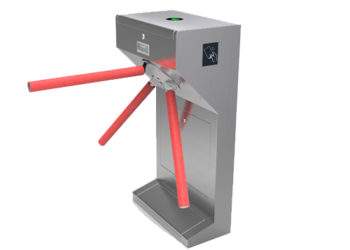
How much will a tripod turnstile system cost?
While many buyers expect a straightforward answer, project costs are influenced by much more than the equipment itself.
A turnstile installation in a corporate office may have very different requirements from a manufacturing facility, educational campus, or commercial complex. Because operational environments vary, total project investments vary as well.
Understanding the factors behind project costs helps organizations budget more accurately and avoid unexpected expenses during implementation.
Quick Answer
The cost of a tripod turnstile system depends on installation scope, access control integrations, verification technologies, infrastructure readiness, and long-term operational requirements.
Organizations that evaluate the full project rather than focusing only on equipment pricing are usually better prepared to make informed purchasing decisions.
What Influences Tripod Turnstile Costs?
Several factors contribute to the total investment required for a commercial turnstile project.
Key Cost Drivers
- Number of entry and exit lanes
- Verification technology requirements
- Infrastructure readiness
- Integration complexity
- Installation environment
- Future expansion needs
Understanding these variables provides a more realistic picture of project budgeting.
Why Similar Facilities Can Receive Different Quotes
Two commercial facilities may request what appears to be the same system and still receive very different project estimates.
This often happens because factors such as:
- Daily traffic volume
- Security requirements
- Site conditions
- Software integrations
- Access policies
can significantly change the scope of implementation.
The project is rarely defined by the turnstile alone. It is usually defined by how the turnstile must operate within the facility.
Cost Factor #1: Number of Access Lanes
The number of lanes directly affects equipment quantity and installation scope.
Organizations may require:
- Single entry lanes
- Multiple entry points
- Dedicated visitor lanes
- Separate employee and visitor access
As the number of controlled access points increases, project costs typically increase as well.
Cost Factor #2: Verification Technology
Access verification requirements influence both equipment and integration complexity.
Organizations commonly choose between:
- RFID credentials
- QR code verification
- Mobile credentials
- Biometric authentication
- Multi-factor verification
More advanced verification environments often require additional configuration and integration work.
Cost Factor #3: Existing Infrastructure
Infrastructure readiness has a major impact on implementation budgets.
Before installation, organizations should evaluate:
- Network availability
- Power availability
- Physical installation conditions
- Entry lane configuration
- Mounting requirements
Facilities requiring substantial site preparation often face higher project costs than those with existing infrastructure in place.
Cost Factor #4: System Integrations
Many organizations want their turnstile system connected to other business platforms.
Examples include:
- Visitor management software
- Employee attendance systems
- Building management platforms
- Security monitoring systems
- Credential databases
These integrations improve operational efficiency but can also increase implementation complexity.
Cost Factor #5: Indoor vs Outdoor Deployment
Environmental conditions influence system requirements.
Outdoor installations may require:
- Additional weather protection
- Environmental durability considerations
- Specialized mounting solutions
- Enhanced equipment protection
Site conditions should always be evaluated during project planning.
The Hidden Costs Buyers Frequently Overlook
One of the most common budgeting mistakes is focusing only on equipment pricing.
In reality, successful projects often include additional elements such as:
- Site preparation
- Cabling work
- Software configuration
- User enrollment
- Testing and commissioning
- Staff training
Many organizations begin their budgeting process expecting a simple equipment price, only to discover that installation requirements and integration needs have a greater impact on the final project cost.
This is why comprehensive security infrastructure planning is often more important than comparing equipment prices alone.
Evaluating Cost as an Access Control Investment
The lowest initial quote is not always the most cost-effective decision.
Organizations should evaluate:
- Scalability
- Long-term support
- Integration flexibility
- Operational efficiency
- Future expansion capability
A well-planned access control investment often delivers greater long-term value than selecting a solution based solely on upfront cost.
What Buyers Should Prepare Before Requesting Quotes
Organizations seeking accurate proposals should document:
Operational Information
- Daily pedestrian volume
- Peak-hour traffic
- Visitor management requirements
- Security objectives
Technical Information
- Verification methods
- Integration expectations
- Reporting requirements
- Monitoring needs
Site Information
- Available space
- Infrastructure readiness
- Environmental conditions
- Entry point layout
Providing this information early helps vendors recommend solutions that better match operational needs.
Need More Accurate Budget Planning?
Organizations planning a new access control project often benefit from evaluating operational requirements before requesting vendor quotations.
A properly designed commercial access control solution can help align visitor management, security objectives, and facility traffic requirements within a single access strategy.
This strengthens overall facility access planning while reducing the likelihood of unexpected implementation costs later in the project.
Real-World Observation
Commercial facilities rarely encounter budgeting challenges because turnstiles are expensive.
More often, cost overruns occur because project requirements were not clearly defined at the beginning.
When organizations understand traffic volumes, integration needs, and operational expectations before requesting proposals, budgeting becomes more predictable and deployment projects become easier to manage.
Frequently Asked Questions
Is equipment pricing the only cost involved in a turnstile project?
No. Infrastructure preparation, installation, integrations, configuration, and operational requirements all contribute to the total project investment.
Why do costs vary between commercial facilities?
Every facility has unique operational requirements, traffic volumes, infrastructure conditions, and integration needs.
Do software integrations affect project costs?
Yes. Additional integrations often increase implementation complexity and project scope.
Should buyers choose the lowest-priced solution?
Not necessarily. Scalability, operational suitability, and long-term support are often more important than the initial purchase price.
Final Perspective
Understanding the cost of a tripod turnstile system requires looking beyond hardware and considering the complete implementation environment.
Budgeting decisions become more effective when organizations evaluate operational requirements, infrastructure readiness, integration expectations, and future growth plans together.
Conclusion
The cost of a tripod turnstile system is influenced by far more than the equipment itself.
From infrastructure readiness and verification technologies to integrations and long-term operational needs, every factor contributes to the overall project investment.
For commercial facilities, the most successful budgeting decisions are typically made when cost discussions are tied to operational requirements rather than product pricing alone.